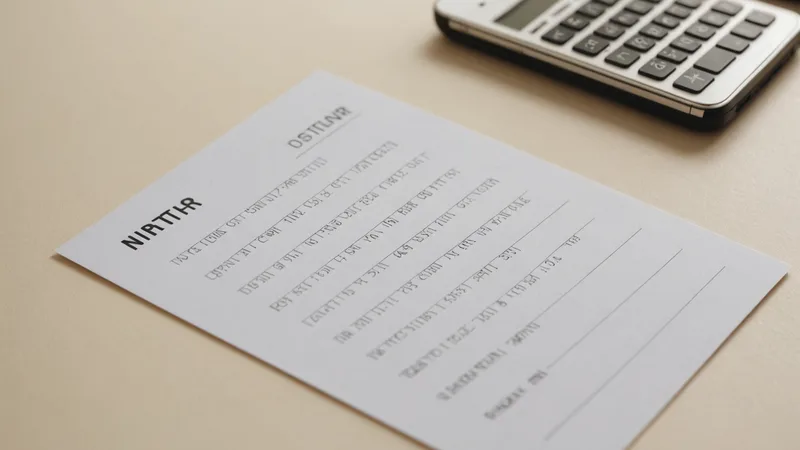
NHS appointment letters for children follow a reasonably consistent format. There is a header block with the trust or hospital name, a reference number, a patient name, and a GP practice. Below that, the appointment date and time, the department or clinic, the location, and a set of instructions. Near the end, a telephone number for rescheduling or queries.
This consistency is partly why NHS appointment letters process well. The key fields appear in predictable positions. Date, time, location, and department can be extracted with high confidence from a well-formatted NHS letter, whether it arrives as a physical letter scanned to PDF or as a digital PDF sent directly to an email address.
Here is a technical walkthrough of what Molo extracts from a typical NHS appointment letter, and where the process currently has limits.
What gets extracted from a standard NHS letter
From a standard NHS outpatient appointment letter, the fields Molo extracts are:
Appointment date and time: The core calendar event. Written in the letter as something like "Wednesday 12 November 2025 at 10:30am" or "12 November 2025 at 10.30." Both formats are handled by our date normalisation layer, which resolves them to ISO format for the calendar entry.
Location: Hospital name, department, and often floor or room number. These go into the event's location field and notes. If the letter includes a street address for the hospital, that address is extracted and attached to the event so it is available if the parent needs to navigate or book parking.
Department and appointment type: The clinic or specialty (for example, Audiology, Outpatient Physiotherapy, Community Paediatrics). This becomes part of the event title, so the calendar entry reads something like "Audiology appointment, Manchester Children's Hospital" rather than a generic "NHS appointment."
Preparation instructions: Many NHS letters include instructions that apply before the appointment: bringing the appointment letter, arriving 10 minutes early, not eating for a specified period. These go into the notes field attached to the calendar event, so they are visible when the parent reviews the event the day before.
Cancellation contact: The telephone number or email address for rescheduling. This is captured in the notes rather than as a separate event, since it is contextual information rather than a date.
What the 30-second claim actually means
The 30 seconds refers to the time between receiving an NHS appointment letter by email and the calendar event appearing. The workflow is: receive the email, forward to your Molo address (two taps on a mobile: forward, paste address, send), and within a short interval the event appears in the shared calendar. The forwarding itself takes a few seconds. The extraction and calendar write happens asynchronously and typically completes within a minute for a standard PDF.
The claim is not that this replaces reading the letter. You should read the letter. It may contain instructions that go beyond what Molo extracts, or nuances that require a decision (for instance, the appointment offers a choice between two dates, or there is a form to complete in advance). The claim is that the core scheduling information is in your calendar without any manual copying step.
Where NHS letters create extraction challenges
NHS correspondence is not fully standardised across trusts and GP practices. There are a few common patterns that reduce extraction confidence:
Letters that require calling to confirm a date: Some NHS letters do not provide a confirmed appointment date. They provide a telephone number and ask you to call to book. In these cases, there is no extractable date. Molo identifies the absence of a date, creates a task-type reminder with the phone number, and flags it for action. The calendar entry will say something like "Call to book: [department] appointment" rather than a dated event.
Letters arriving as scanned images at poor resolution: NHS trusts that still generate physical letters and scan them for email delivery vary in scan quality. A scan at 150 DPI or below often has OCR confidence issues that affect date extraction. Our pipeline flags these for review rather than committing to a potentially wrong date.
Combined parent/child appointment letters: Some NHS letters are addressed to the parent as the registered responsible adult but describe the appointment for the child. The patient name in the header and the appointment date are both present, but in a layout where they do not always co-occur in a consistent position. Our extraction handles this for the most common NHS trust letter formats, but unusual layouts occasionally misattribute the patient name.
Follow-up letters with conditional dates: A letter that says "You will receive a further appointment within 12 weeks" does not contain a extractable date. These are treated the same as the call-to-confirm pattern: a reminder that an appointment is pending, with no specific date until a follow-up letter arrives.
Physical letters, posted
A significant portion of NHS appointment letters for children still arrive as printed post. Molo processes email attachments, not physical letters. If you want a posted NHS letter processed, you need to photograph it or scan it and email the image to your Molo forwarding address. OCR on a well-photographed printed NHS letter generally works well if the lighting is even and the page is flat. We do not provide a dedicated scanning or upload interface; the forwarding address accepts any email with an attachment, including one sent from your phone's camera app.
We are aware that posting versus emailing NHS correspondence is a significant divide. Families who receive most NHS letters by post will get less value from this specific use case than families whose correspondence arrives digitally. That is a genuine limitation we are honest about.